Painting for the Gods
Acrylic on Corrugated Zinc Sheets, Performance
2025–26
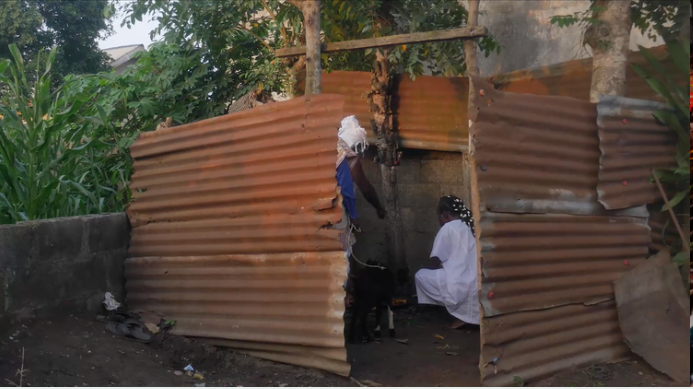
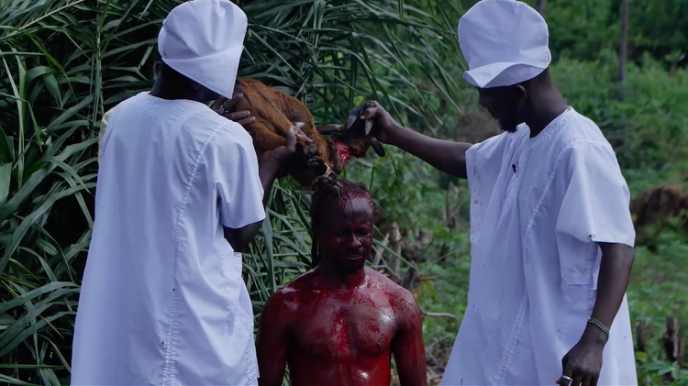
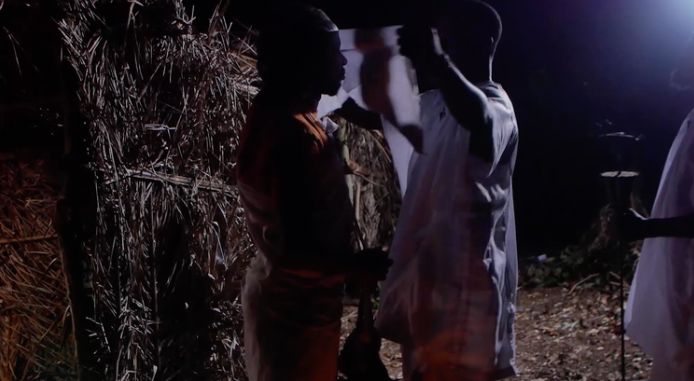
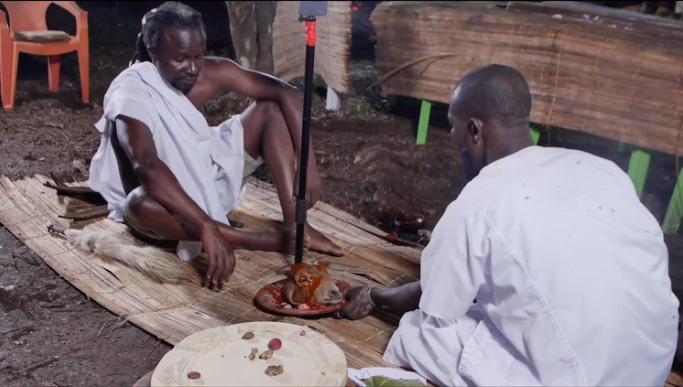
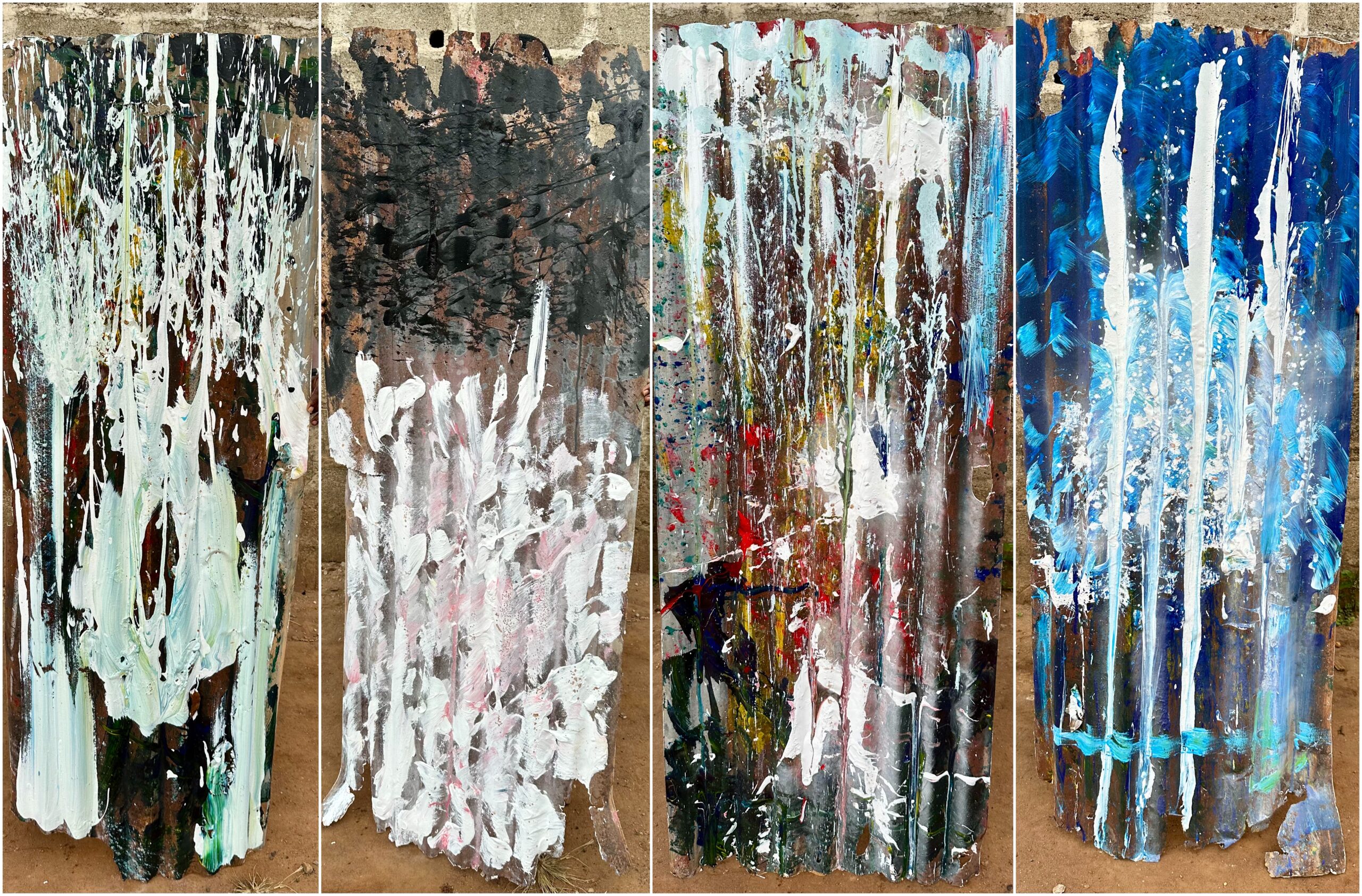
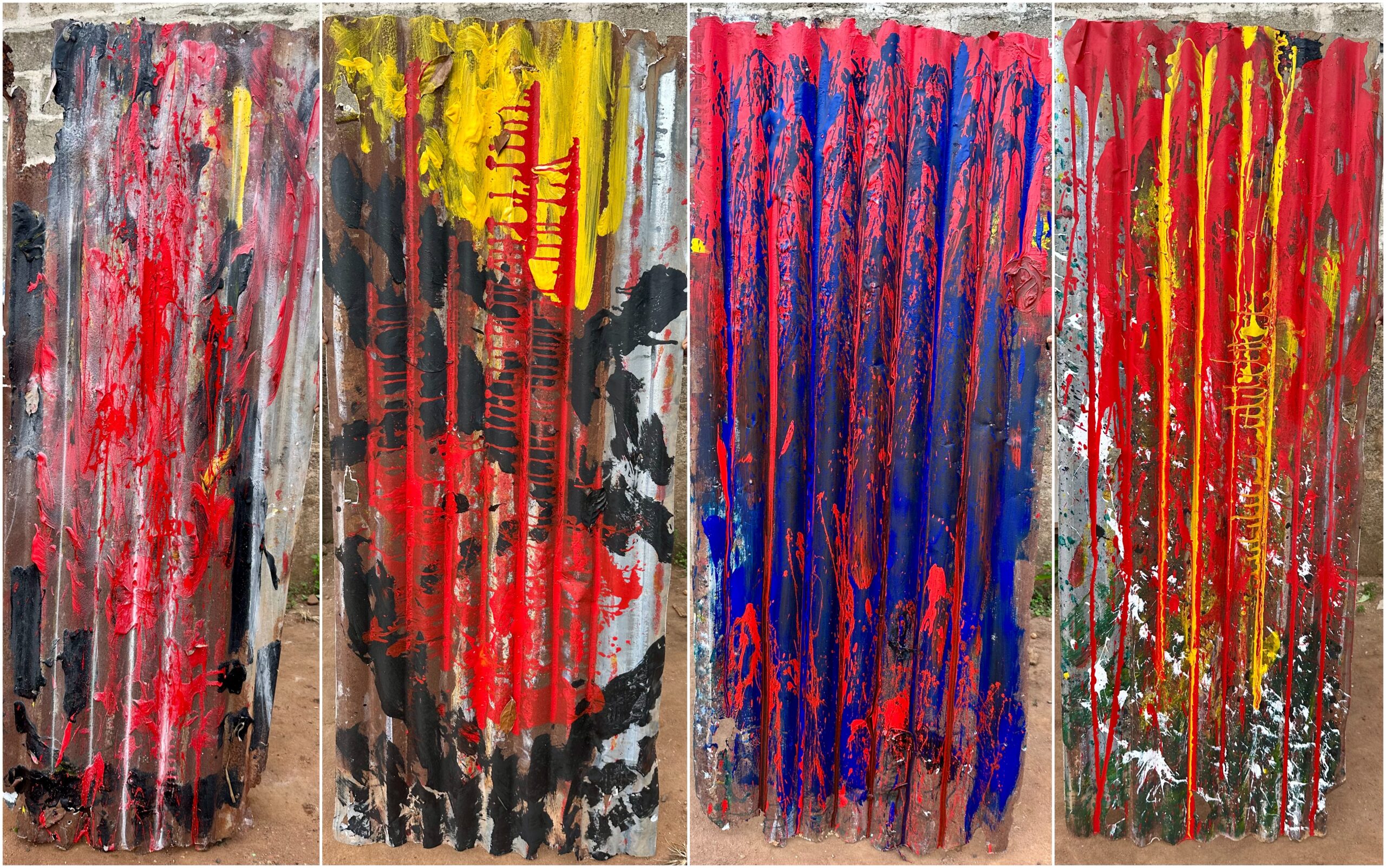
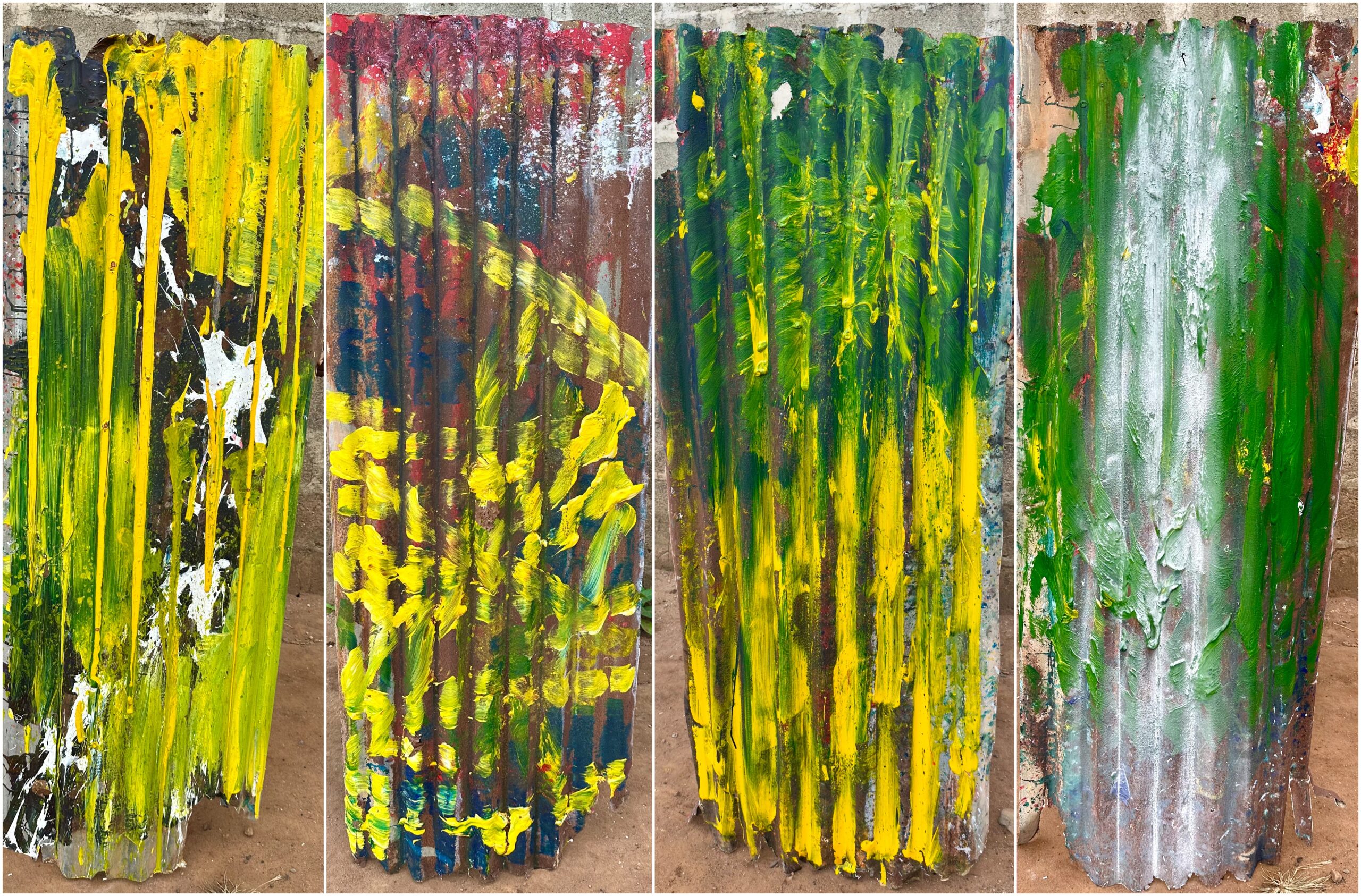
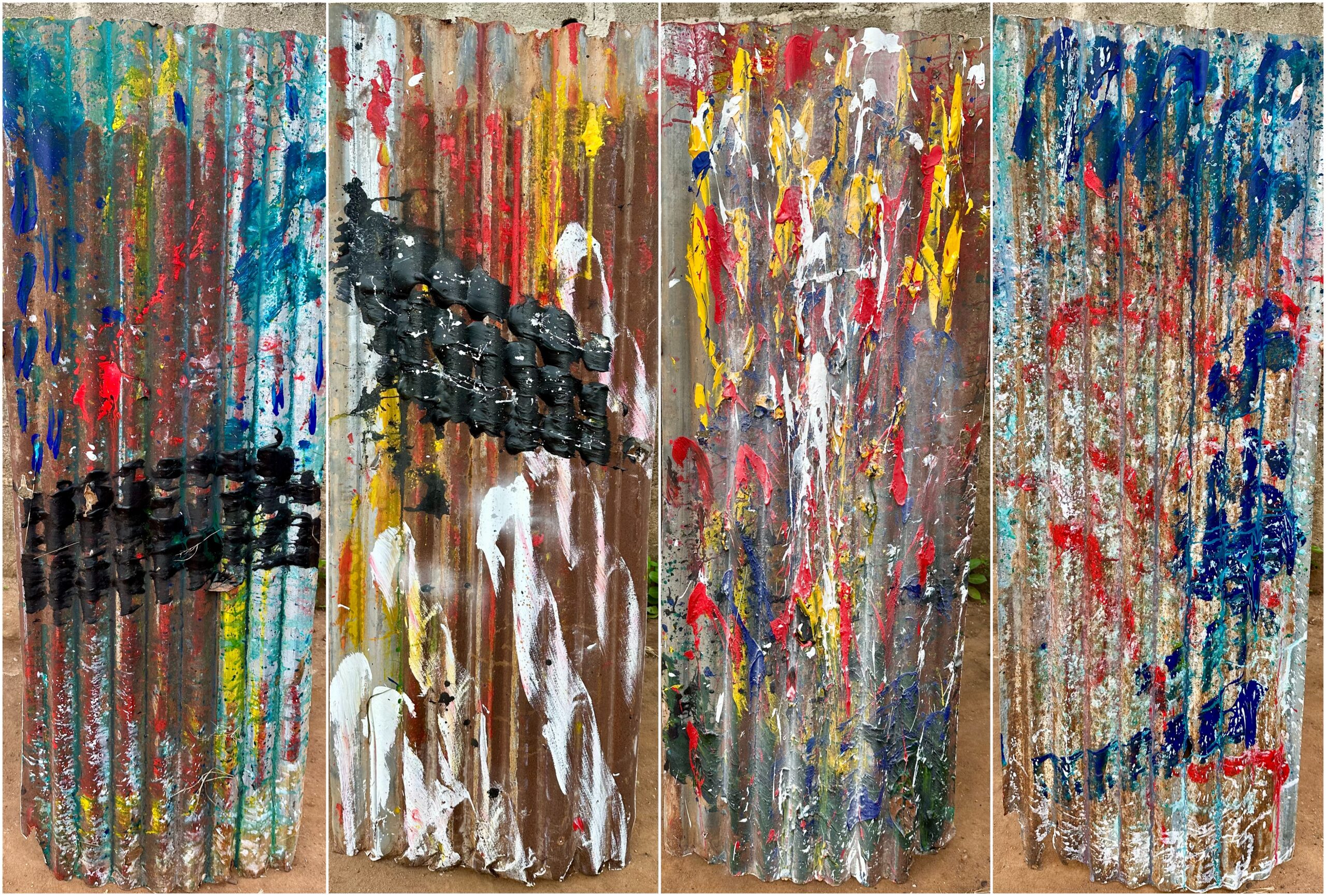
Painting for the Gods is a performative and site-specific body of work exploring the intersection of Yorùbá spirituality, ritual knowledge, and environmental consciousness. The first stages of project were embedded in the forest, which became a dynamic, living studio—a space reclaimed as sacred through collaboration with Yorùbá priests, priestesses, elders, hunters, drummers, and Yorùbá ritual specialists, during a 3-week, self-organised residency in Òṣun and Ìjẹ̀bú Forests, Nigeria.
The residency began with a critical spiritual protocol: three nights of Igbódù rites. Rooted in Yorùbá ritual tradition, Igbódù refers to the secluded, consecrated grove where sacred initiations and ceremonies occur—spaces deeply associated with divine presence, spiritual transformation, and ancestral authority. As articulated by Kolawole Ositola in On Ritual Performance: A Practitioner’s View, these rites mark a threshold between the everyday and the sacred. Within this context, Igbódù rituals were performed to seek permission from the gods and to ensure spiritual alignment. Only after receiving this blessing was I permitted to begin the artistic process.
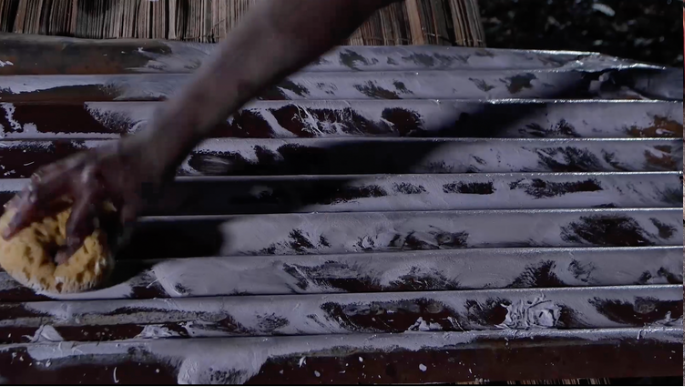
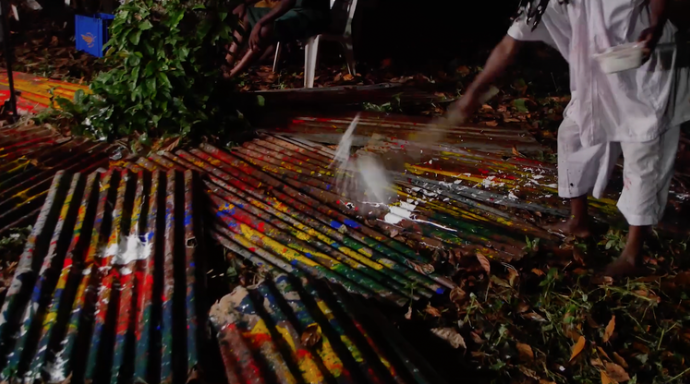
Over the following weeks, I worked within the forest under the guidance of nightly Ifá divination sessions, each one focused on one of the sixteen primary Odù. Each divinatory session—conducted in collaboration with priests and priestesses—informed a painting created that same night. These artworks, rendered primarily on corrugated metal (a material rich with cultural and spiritual significance in Yorùbá architecture and shrine-making), were conceived not as static objects, but as vessels for the energies and narratives of the Odù. They embody a cosmology where colour, myth, and energy converge in ritual form.
A further ceremonial milestone came in the form of a three-night immersive ritual that brought together a spiritual community of drummers, hunters, priests, and priestesses. Set deep in the forest, these collective rituals activated a powerful synesthetic environment—through rhythm, chanting, movement, and presence—in which I painted live. These works emerged not through conceptual planning but through trance, devotion, and energetic surrender, shaped in direct response to the spirit-world’s unfolding.
The forest was not simply the setting but an agent in the creation of the work—a sacred collaborator and witness. By transforming the forest into an open-air studio-altar, the project sought to restore its status as a liminal site where the divine and earthly coexist. This reactivation counters colonial narratives that once labelled such groves “evil forests,” suppressing their spiritual and ecological value. In reanimating this space through art and ritual, the project affirms the deep interdependence of nature, cosmology, and artistic practice.
The process was also documented on film, capturing both the ritual sequences and the evolving transformation of the forest itself. Paintings for the Gods builds on a lineage of previous work that explored the convergence of spirituality, ecology, and ancestral memory. In The Palm (2024), enacted as a performance at Kunsthalle Wilhelmshaven, I examined the spiritual symbolism and material history of the palm tree in African cosmologies. Baobab: The Tree of the Gods (2022/2023) was a meditation on sacred geographies and the rituals surrounding one of the continent’s most iconic spiritual trees. Sacred Grove (2020) engaged with the documentation and activation of sculptural and shrine-based landscapes across 450 hectares of forest of the Osun Osogbo Sacred Grove, emphasizing the living presence of ancestral deities. Each project reflects a continued commitment to site-specific, ritual-infused practices that centres indigenous epistemologies and the sacred dimensions of nature.
By grounding creation in divination, ritual, and embodied performance, Painting for the Gods proposes a different way of thinking about art—one in which the spiritual, material, and ecological are inseparable. The project resists the Western framing of art as secular, autonomous, and object-bound. Instead, it offers a practice that is communal, spiritual, and alive, rooted in ancient ways of knowing and future-oriented ways of being.